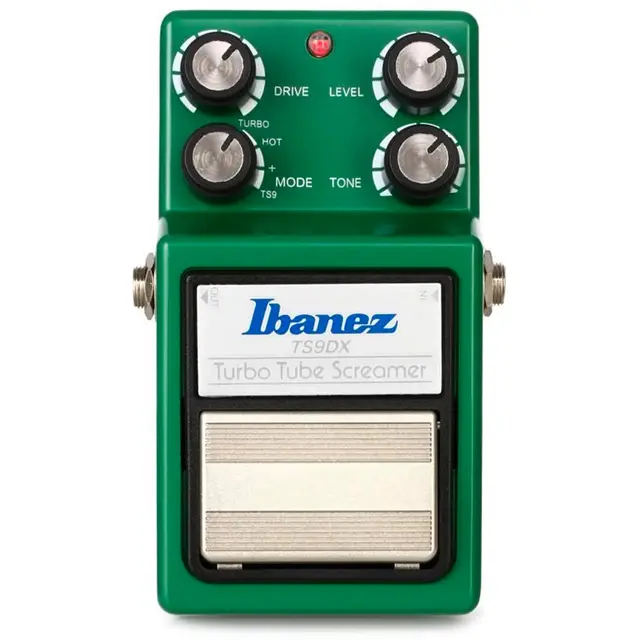
A pedalboard is easier to build when each effect has a clear role. Write down the change you want: a particular drive sound, rhythmic repeats, pitch movement or easier sound changes during a song. Start with the most useful function and leave room to evaluate it.
1. Compare effects in your own signal path
An effect’s result depends on the instrument, amplifier and other equipment around it. Try the pedal with your normal clean or driven sound, and compare the bypassed and active levels. Listen to sustained notes, chords and quieter playing. A louder setting can seem more impressive during a brief demonstration, so match perceived volume where practical. Choose the sound you can use in a song rather than the most dramatic setting in isolation.
2. Verify every power requirement
Check the required voltage, polarity, AC or DC specification, connector and current draw for each device. Use the manufacturer’s stated requirements rather than assuming all pedals accept the same adapter. When planning a shared supply, confirm the capacity and compatibility of each output. Some combinations benefit from isolated outputs, and certain pedals need a dedicated arrangement. Keep the power specifications with the board plan so future additions can be checked before connection.
3. Plan signal and control connections
Decide whether the rig will remain mono or needs a stereo path all the way to its destination. Check which inputs and outputs are actually present. Expression, footswitch and MIDI sockets can have different compatibility requirements even when their connectors look familiar. Try the proposed effect order, listen for unwanted noise and make one change at a time. Check whether presets, tap tempo or bypass behaviour meet your performance needs.
4. Keep the board usable and serviceable
Measure the pedals with their cables connected and allow room for your foot to reach the switches. Include the board, power supply, patch cables and carrying protection in the budget. Secure the wiring without putting strain on sockets. Save a simple reference setup and label important connections. If a problem appears, test one device at a time with a known working cable and suitable power source before replacing several parts of the rig.
Technical references: BOSS, PSA Series Power Adaptor Specifications; BOSS, BCB-60 Pedal Board Support and Specifications.
Product information: MojoZone Editorial

Community
The conversation
Contributions appear after moderation. Share your own experience and keep personal contact details private.